




Thailand Scams: How They Work and How to Avoid Them


Scams: Questions Punters Ask
How Does the Ping Pong Show Scam Work?
A tout shows you a menu of shows, promises a cheap entry or free show, and leads you upstairs. Once you've sat down and ordered a drink, you get a huge bill for drinks and 'show charges', with large staff blocking the door. Avoid it by never following touts upstairs, especially around Patpong. If you're caught, stay calm and call the Tourist Police on 1155.
What Should I Do If a Bar Overcharges Me?
Stay calm and ask for an itemized bill, then go through it with the staff and question each item you didn't order. Most mistakes are fixed quietly once you point them out. If a bar demands a huge sum or staff block the door, don't fight: call the Tourist Police on 1155, and if things turn threatening, pay, leave and report it afterwards. Photograph the bill and the menu prices as evidence.
What Is the Jet Ski Scam?
In Pattaya and Phuket, some jet ski operators claim you damaged the craft when you return it and demand a large payment, sometimes with pressure from friends of the operator. Protect yourself by photographing and filming the jet ski from every angle before you ride, choosing a reputable operator through your hotel, and never handing over your passport as a deposit.
What Should I Do If the Police Stop Me?
Stay calm, polite and respectful. Carry a photocopy or photo of your passport, as police can ask for ID. If you're accused of an offense, ask to see ID and for the Tourist Police to be called on 1155, and contact your embassy if you're detained. Never argue or raise your voice. Genuine fines come with a receipt.
How Do Taxi and Tuk-Tuk Scams Work?
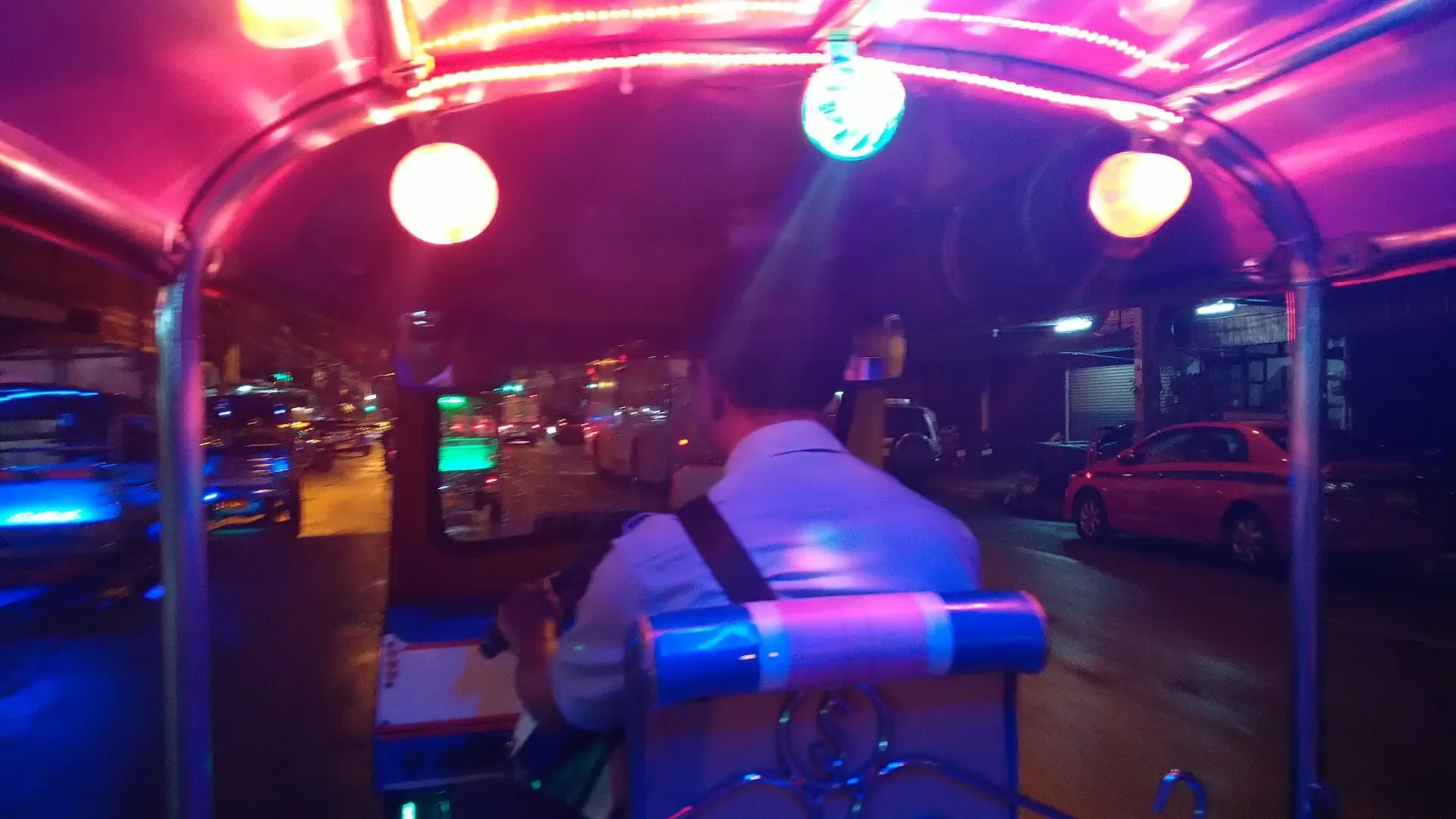
The classics: a taxi driver refuses to use the meter, or a friendly stranger tells you the Grand Palace is closed and sends you on a cheap tuk-tuk tour that ends at a gem or suit shop. Use metered taxis or ride-hailing apps like Grab and Bolt, and ignore anyone who says your destination is closed.
What Should I Do If I Think My Drink Was Spiked?
Get to safety straight away: tell a friend or a member of staff you trust, leave the bar and go back to your hotel, or to a hospital if you feel very unwell, confused or faint. Don't leave with the person you suspect. Call 1669 for an ambulance if needed, and report it to the Tourist Police on 1155 once you're safe. Prevent it by never leaving a drink unattended or accepting one from a stranger.
What Should I Do If My Passport Is Stolen in Thailand?
Report it at the local police station and get a written report, which you'll need for a replacement passport and for your insurance; the Tourist Police on 1155 can help with translation. Then contact your embassy in Bangkok for an emergency passport, taking the police report, passport photos and a copy of your old passport if you have one. Keep a photo of your passport's photo page and entry stamp on your phone for exactly this.
How Do I Protect My Cards and Phone on a Night Out?
Carry one card and only the night's cash, leaving the rest in the room safe. Use ATMs attached to bank branches and cover the keypad, and in bars ask for the card machine to be brought to you rather than letting your card disappear out of sight. Keep your phone in a front pocket, hold it away from the road when walking, and remember that a hand on your thigh in a crowded bar can be a hand in your pocket.
Spotting a Scam Before It Starts
The most common Thailand scams are padded bar bills, upstairs ping pong shows, jet ski damage claims, meterless taxis and the 'Grand Palace is closed' tuk-tuk detour, plus a newer wave of dating app money cons. Almost all of them are avoidable once you know how they work. This page explains every common scam, where it happens, the warning signs and what to do if one catches you, including emergency numbers and how to deal calmly with police. Members get current drink prices at every bar we review, which makes a padded bill obvious. One avoided rip-off covers the year.
Reviewed by Jimmy, Founder of Bangkok Punters
Vetted by punters and expats who live in Thailand. How We Review